
How to Choose Chinese Laid Scrims Mesh Suppliers?

Choosing Chinese Laid Scrims Mesh suppliers requires more than comparing prices on a product page. The right partner should understand reinforcement fabrics, adhesive compatibility, roll handling, and your final application. In practice, a supplier may offer strong samples but provide inconsistent production later. That risk deserves attention.

Begin by checking manufacturing experience, material specifications, and quality control records. Ask whether the scrim uses fiberglass, polyester, or another substrate. Confirm yarn spacing, roll width, coating type, tensile strength, and weight. These details affect lamination, tear resistance, and processing speed. Request recent test reports and a physical sample. Compare both carefully.

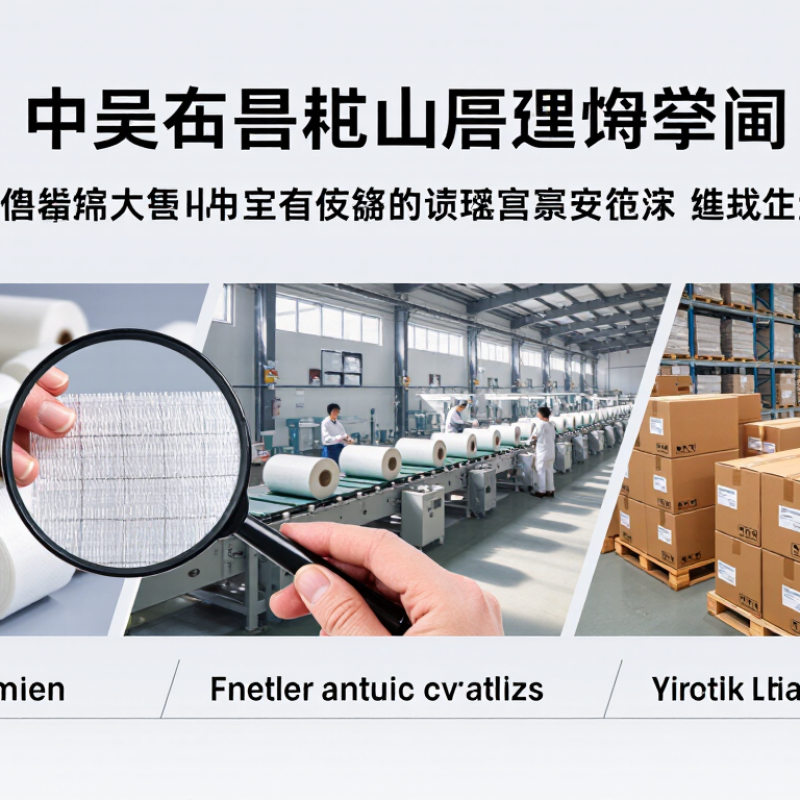
Factory communication also matters. Clear technical replies often reveal genuine expertise. Ask for production photos, inspection procedures, packaging details, and realistic lead times. A reliable supplier should explain limitations instead of promising everything. Visit the facility when possible, or arrange a live video inspection. Not every supplier publishes complete data. That does not automatically mean poor quality, but it requires deeper verification. I have learned that small inconsistencies, such as uneven edges or loose winding, can become expensive during large-scale converting. Sample approval is helpful, yet it is not enough. Use a written specification and define acceptable tolerances before placing an order. Consider export experience, responsive after-sales support, and payment security as well. The cheapest offer may save money today and create production problems tomorrow. Careful evaluation builds a more dependable supply chain for Chinese Laid Scrims Mesh. Mistakes can happen. Good suppliers help you detect them early.
How to Choose Chinese Laid Scrims Mesh Suppliers?

Understanding Laid Scrims Mesh and Its Common Applications

How to Choose Chinese Laid Scrims Mesh Suppliers?

Laid scrims mesh is a reinforcement grid made from yarns placed in straight directions. The yarns are bonded at intersections, rather than woven over and under. This structure keeps the mesh lightweight and dimensionally stable. It can also reduce material use without sacrificing useful tensile support.

In practical applications, manufacturers add laid scrims to roofing membranes, waterproofing sheets, insulation facings, flooring materials, and flexible packaging. Some agricultural covers use it for improved tear resistance. Composite producers may select polyester, fiberglass, or polypropylene yarns, depending on strength, flexibility, and temperature requirements. Mesh spacing matters. Wider spacing may improve flexibility, while tighter spacing can support heavier coatings.

When comparing Chinese suppliers, request samples with measured width, yarn type, mesh size, adhesive details, and tensile data. Check whether production tolerances remain stable across several batches. A reliable supplier should explain coating compatibility and provide clear test records. Ask how rolls are packed, labeled, and protected from moisture during transport. Small details matter.

I once assumed higher tensile strength always meant better performance. That was too simple. Excessive stiffness can create wrinkles during lamination. A careful trial should test bonding, elongation, tear resistance, and handling on the final production line. Communication also deserves attention. Clear technical drawings and prompt answers often reveal more than a polished catalogue. Supplier claims still need verification.

Identifying the Required Scrim Mesh Specifications

Identifying the Required Scrim Mesh Specifications

Before contacting Chinese laid scrim mesh suppliers, define the reinforcement’s working conditions. Grand View Research valued the global nonwoven fabrics market at approximately USD 53.6 billion in 2022. It also forecasts strong growth through 2030. This expansion increases supplier choice, but specifications still control performance.

This expansion increases supplier choice, but specifications still control performance.

Start with the substrate and loading direction. Glass fiber, polyester, and polypropylene offer different tensile behavior and chemical resistance. Record mesh count, yarn tex, basis weight, roll width, and length.

For example, a 5 × 5 mm grid may suit roofing membranes, while a tighter grid can support thinner films. State the required tensile strength in both machine and cross directions. Include elongation limits.

Small details matter.

Use ISO 1421 or ASTM D5035 methods when comparing tensile results. Do not accept “high strength” as a measurable specification.

Ask for test temperature, specimen width, conditioning time, and failure mode. A supplier’s reported 1,200 N/5 cm means little without test conditions.

Smithers’ nonwovens market analysis also highlights application-specific performance and quality consistency as major purchasing factors.

Check coating compatibility, moisture content, edge treatment, and roll hardness. Request three production samples, not one. I have seen clean samples hide uneven yarn tension. That mistake is easy to make.

Confirm width tolerance, splice limits, packaging, and batch traceability before approving production. A reliable supplier should provide recent test records, but independent verification remains sensible.

Evaluating Chinese Suppliers and Manufacturing Capabilities

When evaluating Chinese laid scrim mesh suppliers, study manufacturing capability rather than catalog photos. Grand View Research valued the global nonwoven fabrics market at approximately USD 53.4 billion in 2022. It also forecasts strong growth through 2030. Laid scrim is only one segment, but this data signals sustained demand for reinforcement materials. Use it as context, not proof of supplier quality.

A capable Chinese factory should explain yarn selection, mesh count, coating add-on, and width control clearly. Ask for production records, not only sample rolls. During practical audits, inspect warping tension, adhesive application, drying temperature, and winding stability. Check whether operators record defects by shift. The ISO 9001 framework supports documented control, but certification alone is insufficient. Request recent inspection reports covering tensile strength, elongation, basis weight, and dimensional tolerance. Test samples independently when the scrim will support roofing, flooring, or composite laminates.

Manufacturing scale matters. Smithers’ industry outlook reports continuing capacity expansion across global nonwovens, increasing pressure on consistency and delivery. A supplier should disclose monthly capacity, machine width, backup equipment, and normal lead times. Ask for a trial order with different mesh densities. Small details matter. One weakness in many evaluations is trusting a perfect sample too quickly. Production variation may appear after several pallets. Compare three batches, retain sealed specimens, and review corrective-action records before approving regular orders.

How to Choose Chinese Laid Scrims Mesh Suppliers?

Evaluating Supplier and Manufacturing Capabilities

The chart presents practical procurement benchmarks for evaluating laid scrim mesh suppliers. The percentages represent recommended capability targets rather than data from any specific company or brand. Buyers should verify these indicators through factory audits, sample testing, quality records, and delivery history.

Checking Quality Standards, Samples, and Production Consistency

How to Choose Chinese Laid Scrims Mesh Suppliers?

Quality certificates are useful, but they should not end the investigation. The ISO Survey 2022 recorded 1,265,216 ISO 9001 certificates worldwide. That figure shows broad adoption, not automatic product reliability. Ask suppliers to provide current certificates, scope details, and recent audit findings. Check whether their quality system covers scrim production, coating, and final inspection. Request test reports using recognized methods, such as ASTM D5035 or ISO 9073-3, where applicable. Compare tensile strength, mesh spacing, roll width, coating weight, and elongation. Small differences can affect lamination performance.

A perfect sample can still mislead. Request samples from three separate production lots, preferably with batch numbers and manufacturing dates. Inspect the rolls under bright, angled light. Loose yarns, uneven intersections, edge curling, and frequent splices should be recorded. Ask for the original laboratory data, not only a passing certificate. For key measurements, many quality teams use statistical process capability, with Cpk 1.33 as a common internal target. It is not a universal rule. Review control charts for at least several lots, then compare actual results against declared tolerances. A supplier may pass one inspection and still show unstable coating weight later. I would also arrange a small trial order before annual purchasing. That step costs more time. It often exposes packaging damage, tension variation, or inconsistent roll lengths that samples hide.

Comparing Prices, Delivery Terms, and Supplier Support

How to Choose Chinese Laid Scrims Mesh Suppliers?

Price is important, but the cheapest quotation can hide extra costs. Compare mesh weight, roll length, coating, packaging, and minimum order quantity. Ask for a written specification sheet and a physical sample. A reliable supplier should explain tensile strength, openness, and dimensional tolerance clearly. During evaluation, record every quotation in one table. Small details often change the final landed cost.

Tips: Request prices under the same delivery term, such as FOB or CIF. Confirm whether tooling, testing, export cartons, and documentation are included. Check production lead time, not only the shipping date. A supplier promising seven days may mean seven days after material preparation. That difference matters.

Delivery reliability depends on capacity and communication. Ask how the supplier handles urgent orders, damaged rolls, and inspection failures. Good support includes prompt technical answers, updated production photos, and a clear replacement process. A trial order can reveal more than a polished sales presentation. I once assumed fast replies meant strong service; that was not always true. Response quality matters more than speed. Check the roll labels, edge alignment, and moisture protection when goods arrive. Keep inspection records and approved samples for future claims. Supplier support is partly measurable, but judgment still has limits.

How to Choose Chinese Laid Scrims Mesh Suppliers? - Comparing Prices, Delivery Terms, and Supplier Support

Supplier Profile Typical Product Configuration Indicative Price
(USD/m²)
Minimum Order Standard Lead Time Common Delivery Terms Payment Terms Quality & Documentation Technical Support Best Fit
Profile A
Large Integrated Factory
Fiberglass or polyester laid scrim; 5–50 mm mesh; 20–150 g/m²; PVC, acrylic, or starch coating $0.18–$0.42 5,000–10,000 m² 20–35 days after approval FOB, CIF, or FCA 30% deposit; 70% before shipment or against shipping documents Batch inspection reports, technical data sheet, packing list, and standard export documents ★★★★☆ Container-volume orders and recurring industrial projects
Profile B
Mid-Sized Export Manufacturer
Polyester, fiberglass, or hybrid scrim; custom widths and coating weights available $0.22–$0.50 2,000–5,000 m² 18–30 days after sample confirmation EXW, FOB, CIF, or DAP by quotation 30% deposit; balance before shipment Pre-shipment inspection available; product specifications and carton markings can be customized ★★★★★ Importers needing flexible specifications and regular communication
Profile C
Specialty Custom Supplier
High-strength polyester or fiberglass scrim for roofing, flooring, insulation, and composite applications $0.35–$0.78 1,000–3,000 m² 25–45 days for custom constructions FOB, CIF, or DDP subject to destination 30% deposit; balance before shipment; letter of credit negotiable for larger orders Coating-weight records, tensile-test data, sample approval, and customized technical documents ★★★★★ Performance-critical products requiring development support
Profile D
Cost-Focused Volume Supplier
Standard fiberglass or polyester laid scrim; limited coating and color options $0.15–$0.32 10,000–20,000 m² 25–40 days EXW or FOB mainly 30% deposit; 70% before loading Basic quality inspection and export documentation; third-party inspection usually charged separately ★★★☆☆ Price-sensitive buyers with stable, standard specifications
Profile E
Small-Batch Trading & Converting Partner
Mixed-source scrim with slitting, rewinding, labeling, and small-lot packaging services $0.30–$0.65 500–2,000 m² 15–30 days, subject to stock availability FCA, FOB, CIF, or courier shipment Full payment for small trial orders; 30% deposit for repeat orders Basic mill documentation; custom labels and roll sizes commonly available ★★★★☆ Trial orders, sampling, short runs, and buyers testing new markets

Benchmark note: The price ranges are indicative export-market levels for standard Chinese laid scrims and can vary with fiber type, yarn count, mesh size, coating, roll width, order volume, packaging, destination, and freight rates. Confirm the final quotation, test results, production schedule, Incoterm, and payment conditions before placing an order.