
Choosing an Inflatable Boat Platform is not simply a matter of size or price. The right platform should match your boat, water conditions, carrying needs, and storage space. A compact fishing platform may work well on a calm lake. It may feel unstable near strong currents or changing weather.
Real-world handling matters. Imagine carrying the deflated platform from a car to the shoreline, then inflating it beside wet gear and uneven stones. Its weight, inflation time, valve design, and surface grip quickly become important. Check the material thickness, reinforced seams, attachment points, and stated load capacity. These details often reveal more than attractive product photos.
Safety should guide every decision. Choose products with clear specifications, traceable manufacturers, and dependable customer support. Independent testing, user instructions, and verified reviews can provide useful evidence, although none replaces careful inspection. Confirm that the platform suits your local boating rules and approved equipment requirements. Never exceed its rated capacity. Not even briefly.
This guide explains how to compare stability, buoyancy, portability, durability, and maintenance needs. It also considers deck layout, boarding access, and compatibility with your inflatable boat. Some platforms look impressive but become awkward when loaded. That is an easy mistake to make. By examining practical performance instead of marketing claims, readers can make a more informed and reliable choice for fishing, swimming, training, or relaxed days on the water.
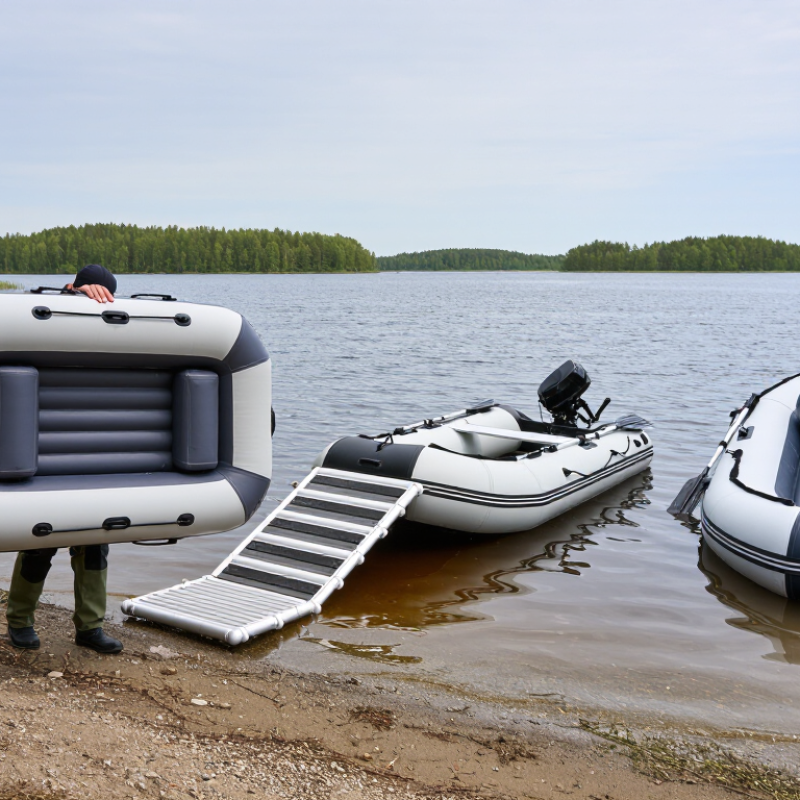
Choosing an inflatable boat platform begins with a use case, not a color or advertised maximum load. Will it carry anglers, serve as a tender, support boarding, or hold supplies on calm inland water? Write the real passenger count, equipment weight, travel distance, launch location, and storage space. Be specific. The NMMA 2023 U.S. Recreational Boating Statistical Abstract reported about 11.6 million registered recreational boats. That scale reflects varied users, not one universal platform design.
Match the platform to conditions. For fishing, prioritize a rigid-feeling deck, wide stance, and attachment points that do not obstruct movement. For tender duty, check boarding height, drainage paths, and deflation speed. Measure the inflated width against your boat’s interior, then test loaded balance beside shore. Keep heavy batteries and fuel containers low and centered. Published load figures can assume ideal distribution; my own estimates are often too optimistic. Leave a safety margin.
Safety deserves more weight than convenience. The U.S. Coast Guard’s 2023 Recreational Boating Statistics recorded 3,844 accidents, 556 deaths, and 2,641 injuries. These figures do not prove a platform caused an accident, but they show why stability and flotation require verification. Inspect seams, valves, floor pressure, and fasteners before every outing. Use recognized guidance, including applicable ISO 6185 requirements, and follow the tested capacity. A small trial run may reveal awkward movement, flexing, or poor visibility. Revise the plan before open water.
Choosing an inflatable boat platform starts with its intended use. A roll-up platform packs easily and suits short boarding stops or light swimming gear. A modular platform offers more usable space and better stability near the boat’s side. Rigid-supported designs feel firmer underfoot, but they usually weigh more and need extra storage space. In practical testing, a platform that looked spacious felt crowded after adding fins, a cooler, and two wet passengers.
Material affects comfort, durability, and handling. Drop-stitch fabric creates a firm surface when inflated correctly. It resists flexing, but sharp objects and poor pressure control can still cause damage. PVC-coated fabric is common, affordable, and easy to clean after saltwater use. Reinforced seams matter more than surface appearance. Look closely at corners, attachment points, and rubbing areas. Aluminum or composite panels can improve stiffness, although they add weight and may feel hot under direct sunlight.
Weight capacity needs careful reading. A stated capacity may include people, equipment, and the platform itself. Leave a safety margin of at least 20 percent for movement and uneven loading. For example, a 300-kilogram rating should not carry 300 kilograms in rough water. I once underestimated how quickly loose equipment shifted during boarding. The platform remained inflated, but the balance became uncomfortable. Check inflation pressure, valve condition, and attachment straps before every launch. Manufacturers’ figures help, but real water conditions deserve more attention.
An inflatable boat platform should feel predictable underfoot, not merely look spacious in photographs. Stability depends on width, air pressure, floor structure, and weight distribution. A platform that tilts when one person steps aboard can become tiring during fishing, boarding, or equipment handling. Test it near shore first. Place one person at each side, then shift weight slowly. Watch the edges and valves. I once underestimated a narrow platform; a cooler moved three inches, and the whole surface felt less secure than expected.
Measure carefully before ordering. Record the boat’s usable floor length, beam, tube diameter, and attachment points. Leave clearance for oars, seats, and emergency movement. The platform should not press sharply against inflatable tubes. Check its rated load, including people, fuel, batteries, and wet gear. Dimensions listed online may describe the outer frame, not the actual standing area. That difference matters.
Tips: Inflate the boat and platform to their recommended pressures, then check fit again. Compare the connector style with your boat’s fittings, not just its general shape. Ask whether straps, rails, or adapters are included. Secure loose items before moving. Compatibility is more than size; it includes materials, pressure limits, attachment strength, and how the platform behaves in small waves. Recheck everything after the first outing.
Choosing an inflatable boat platform starts with an honest portability check. Measure its packed size, not just the inflated dimensions. A platform that fits your boat may still overwhelm your vehicle or storage locker. Look for carry handles, a manageable weight, and a repair kit with compatible patches. I once underestimated a folded platform’s bulk, and it occupied half my garage.
Setup methods also affect real-world usability. High-pressure inflation gives better stiffness, but it requires a reliable pump and several minutes of work. Drop-stitch panels usually feel firmer underfoot, while simpler air chambers may inflate faster. Check the valve position before purchase. It should remain accessible when the platform is attached.
Follow the stated pressure and load limits. Never judge stability by appearance alone. Test the platform in shallow, calm water first, and inspect seams after each use.
Tips: Practice setup on dry ground. Time the inflation process. Mark where each strap connects. Rinse away sand and salt, then dry every surface completely. Store the platform loosely rolled in a cool, shaded place. Avoid sharp folds, heavy objects, and damp containers. My own storage routine was imperfect; trapped moisture caused a small odor and required extra cleaning. A monthly inspection of valves, seams, handles, and attachment points can reveal problems before your next outing.
Choosing an inflatable boat platform should begin with safety, not color or carrying capacity. The U.S. Coast Guard’s 2023 Recreational Boating Statistics recorded 3,844 boating accidents, 564 deaths, and 2,126 injuries. It also reported that 87% of fatal drowning victims were not wearing life jackets. Therefore, inspect attachment points, anti-slip surfaces, grab lines, and compatible flotation devices. A stable platform should remain level when one person kneels near its edge. Test this beside the dock, not in open water.
Durability depends on fabric, seams, valves, and storage habits. Look for reinforced PVC or Hypalon-type material, heat-welded seams, protected valves, and repair patches. ISO 6185 provides international requirements for inflatable boats, but certification alone does not replace practical inspection. Check air retention overnight. Examine scuffs around handles and floor joints. Small leaks become expensive surprises. I have found that a thicker floor can improve confidence, yet it may increase weight and setup time. That trade-off is easy to underestimate.
Overall value means more than the purchase price. Compare load rating, included pump quality, repair support, replacement parts, packed size, and expected service life. A platform used weekly may justify stronger fabric and stainless hardware. Occasional users may value quick inflation more. The NMMA’s boating industry reports show continued participation in recreational boating, but usage patterns vary widely. My own preference is a platform that can be carried safely by two people. Convenient is not always durable. A careful pre-launch check remains essential.
| Platform Construction | Typical Material & Thickness | Typical Inflation Pressure | Chambers & Safety Features | Durability Factors | Portability | Best Use | Overall Value |
|---|---|---|---|---|---|---|---|
| Basic Single-Layer PVC | Lightweight PVC fabric, approximately 0.25–0.45 mm | Typically 3–5 psi, depending on the valve and design | Usually 1–2 air chambers; select models with a Boston-style valve, grab lines, and non-slip deck material | Moderate resistance to abrasion and sunlight; more vulnerable to sharp rocks, hooks, and prolonged UV exposure | Very easy to fold, carry, and store | Calm-water recreation, occasional use, and short-term trips | High initial value |
| Reinforced PVC | Multi-layer PVC with polyester or nylon reinforcement, approximately 0.70–1.00 mm | Typically 3–5 psi | Two or more separate chambers, pressure-relief protection, reinforced handles, and perimeter grab lines are preferred | Better puncture, abrasion, and seam resistance than single-layer PVC; still benefits from a protective cover | Portable, although heavier and less compact than basic PVC | Regular recreational use, tenders, fishing, and sheltered coastal water | Best all-round value |
| High-Pressure Drop-Stitch PVC | Interconnected fabric-reinforced drop-stitch core with PVC skins, commonly about 0.80–1.20 mm outer material | Often 8–15 psi; follow the manufacturer’s pressure rating | Rigid high-pressure floor, non-slip surface, multiple chambers, secure D-rings, and a visible pressure gauge are desirable | Excellent stiffness and good resistance to deformation; seams and exposed edges still require protection from sharp objects | Moderate portability; deflates compactly but may be heavier than a simple air deck | Stable boarding platforms, fishing, photography, and frequent setup | High performance value |
| Heavy-Duty Multi-Chamber PVC | Thick reinforced PVC, approximately 0.90–1.20 mm, with abrasion patches in high-wear areas | Typically 3–5 psi for buoyancy tubes; platform floors may use higher pressure | Three or more independent chambers, robust grab lines, reinforced towing points, non-slip deck, and drain openings where appropriate | Strong abrasion and impact resistance; independent chambers provide additional buoyancy redundancy | Lower portability because of increased weight and bulk | Frequent use, heavier passengers or equipment, and boat-to-platform transfers | Strong long-term value |
| CSM-Coated Fabric | Woven fabric coated with chlorosulfonated polyethylene rubber, often approximately 0.70–1.00 mm | Typically 3–5 psi, subject to the product specification | Multiple air chambers, reliable valves, reinforced lifting points, non-slip areas, and strong perimeter lines are recommended | Excellent resistance to UV radiation, saltwater, chemicals, and temperature changes; usually costs more initially | Moderate portability; material is durable but generally heavier than light PVC | Intensive marine use, frequent deployment, and harsh sun or saltwater conditions | Best durability value |
| Selection note: Actual specifications vary by design. For safer operation, verify the rated load, maximum passenger capacity, chamber layout, inflation pressure, valve condition, grab lines, non-slip surfaces, towing points, and repair provisions before purchase. Never exceed the stated load or pressure limits, and inspect seams and valves before every use. | |||||||