
How to Find a Reliable EV E Axle Supplier in China 2026?

China’s electric vehicle market has moved from rapid adoption to intense engineering competition. The International Energy Agency’s Global EV Outlook 2025 reported more than 17 million electric cars sold worldwide in 2024. China accounted for approximately 11 million sales, with electric cars nearing half of new-car sales. These figures show why the search for an EV e-axle supplier China has become a technical and strategic decision.

An e-axle integrates the motor, inverter, gearbox, and differential into one compact drive unit. Its quality affects efficiency, noise, thermal stability, and vehicle durability. A reliable supplier should therefore provide traceable test records, not only attractive samples. Ask for efficiency maps, end-of-line inspection data, IP ratings, NVH results, and durability-test conditions. Check whether the factory controls rotor balancing, gear accuracy, winding quality, and software calibration internally. Supplier audits should include production floors, laboratories, and rejected-part procedures.

Industry experience also matters. The China Association of Automobile Manufacturers reported strong new-energy vehicle growth in 2024, increasing pressure on suppliers to deliver consistently at scale. However, market growth does not automatically prove engineering maturity. A glossy facility can still hide weak process control. This is where buyers often misjudge risk. Compare prototype performance with batch-production evidence, warranty records, and customer references. Request samples from different production dates. Small differences can reveal large problems.

This guide explains how to evaluate Chinese e-axle manufacturers for 2026 projects. It focuses on measurable capability, transparent communication, and practical verification. No supplier is perfect. The right partner is the one that identifies weaknesses early and improves them with evidence.

How to Find a Reliable EV E Axle Supplier in China 2026?

Size the Opportunity: China Sold Over 11 Million EVs in 2024 (IEA)

China’s electric vehicle market crossed a major threshold in 2024. The IEA reports that more than 11 million EVs were sold in China that year. This volume creates strong demand for efficient, durable e-axles. It also creates pressure on suppliers to scale without weakening quality control.

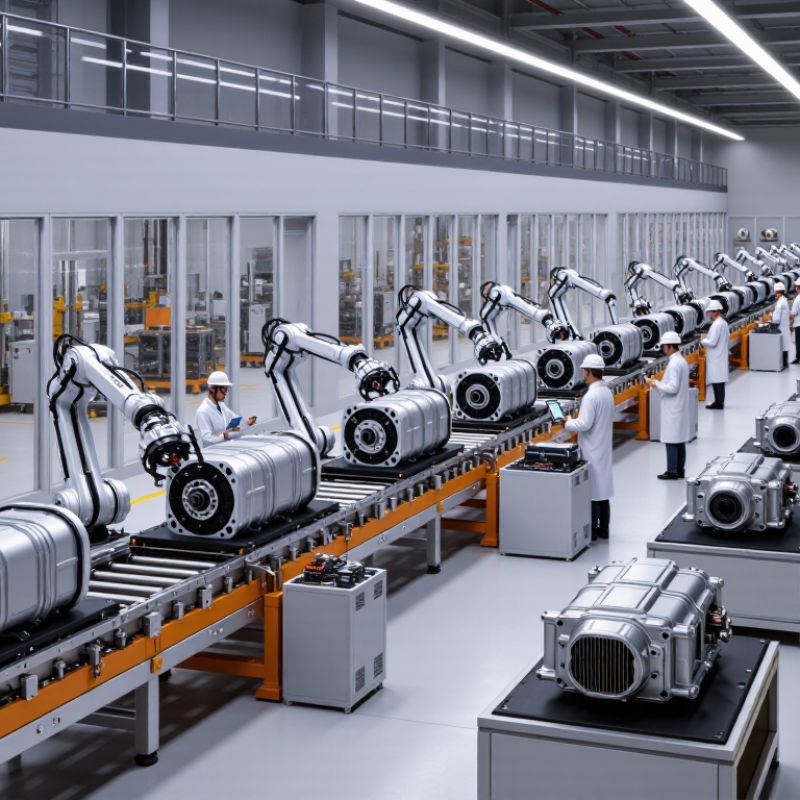
A reliable Chinese e-axle supplier should provide traceable production records, not only attractive catalog images. Ask for torque curves, gear-ratio data, thermal test results, and continuous endurance reports. Check whether motor, inverter, gearbox, and software testing follow documented procedures. Factory visits should include the assembly line, inspection area, and storage controls. Small details matter. Look for clean workstations, labeled components, and calibrated measuring equipment.

Supply capability deserves equal attention. Review monthly capacity, critical component sources, delivery history, and engineering support after installation. A capable supplier should explain noise, vibration, heat, and sealing risks in practical terms. Independent validation can reveal weaknesses that internal reports miss. However, no audit is perfect. A polished factory tour may hide inconsistent night-shift inspection. Request sample records from different production dates and compare them carefully. The lowest quotation may also exclude software updates, testing fixtures, or warranty support. A better decision weighs lifecycle cost, technical transparency, and evidence from real operating conditions. That process takes longer. It usually prevents expensive surprises.

Set E-Axle Targets: 800 V, 150–300 kW, and ≥90% Peak Efficiency

How to Find a Reliable EV E-Axle Supplier in China in 2026?

Set clear technical targets before contacting an EV e-axle supplier. Require an 800 V electrical architecture, 150–300 kW peak power, and at least 90% peak efficiency. Ask whether these figures apply to the complete e-axle, not only the motor. Request test data showing voltage, torque, speed, temperature, and cooling conditions. A serious supplier should provide efficiency maps, inverter limits, and continuous power values. Peak power alone can hide practical weaknesses.

Visit the supplier’s engineering and validation facilities when possible. Inspect dynamometer records, thermal cycling equipment, end-of-line testing, and traceability systems. Ask engineers to explain bearing life, gear noise, sealing, software control, and service procedures. An 800 V system needs careful insulation and high-voltage safety controls. Confirm production capacity, quality audits, incoming inspection, and corrective-action records. A polished factory tour is useful, but it is not proof. I would not trust one successful test.

Tips: Compare suppliers using the same test conditions. Check efficiency at common driving points, not only the best result. Request independent validation or witness testing before approval. Review sample failures honestly, because every experienced manufacturer has some. Pay attention to response speed and technical clarity. Slow answers may signal weak documentation, although this is not always true. Build a pilot order with measurable acceptance criteria, including power, efficiency, noise, temperature rise, and delivery consistency.

Qualify Compliance: IATF 16949, ISO 26262, and UN R100 Documentation

A reliable EV e-axle supplier in China should prove compliance before discussing price or production volume. The IEA’s Global EV Outlook 2025 reports nearly 17 million electric cars sold worldwide in 2024. That scale increases pressure on safety evidence, traceability, and repeatable manufacturing.

Request the current IATF 16949 certificate, then check its scope, plant address, expiry date, and certification body. The scope should cover relevant electric powertrain processes, not only general machining. Ask for process flow charts, control plans, measurement records, and corrective-action history. One certificate is not enough. A practical audit should trace one serial number from incoming gears to end-of-line testing. Missing links matter.

For functional safety, request ISO 26262 evidence for the e-axle’s safety lifecycle. Useful records include hazard analysis and risk assessment, safety goals, technical safety requirements, verification results, and supplier responsibility agreements. Confirm whether the assessment covers the inverter, motor, sensors, and control software. Also request UN R100 approval documents for the applicable electric powertrain or rechargeable electrical energy system. UNECE requirements focus on vehicle electric safety, so UN R100 evidence does not automatically prove product reliability. The uncomfortable lesson is simple: document packages can look complete while leaving interface risks unexplained. Compare test conditions, software versions, and responsible engineers before signing a sourcing contract.

Audit Production Readiness: PPAP, Traceability, and 100,000+ Units/Year

Finding a reliable EV e-axle supplier in China requires more than reviewing product brochures. Audit production readiness through PPAP documentation, traceability systems, and verified annual capacity. A serious supplier should provide design records, process flow charts, PFMEA, control plans, measurement results, and approved samples. Ask whether these documents reflect current production, not an outdated project. Paperwork is not proof.

Traceability should connect every e-axle to its materials, operators, machines, inspection results, and software version. Each unit needs a readable serial number. Records should remain searchable after shipment. During an audit, select random finished units and trace them backward to bearings, gears, housings, and electrical components. Check calibration dates too. One missing record may reveal a wider control weakness.

A claim of 100,000+ units per year needs practical evidence. Request monthly output data, equipment lists, shift plans, bottleneck analysis, and maintenance records. Walk through the line during normal production, not only during a prepared visit. Observe testing stations, torque control, leak testing, end-of-line inspection, and rejected-part handling. Capacity without stable quality gates is only a number. I would also ask how the supplier manages sudden demand increases and component shortages. Their answer may be incomplete, but that honesty is useful. A reliable partner should explain limitations, corrective actions, and realistic ramp-up timing rather than promise perfection.

Compare Suppliers by TCO: Warranty, Lead Time, Testing, and 2026 Compliance

How to Find a Reliable EV E Axle Supplier in China in 2026?

Total cost of ownership starts beyond the quoted unit price. A low offer may hide tooling, integration, transport, and failure-related expenses. Compare warranty length, mileage limits, claim procedures, and replacement-part availability. Ask whether coverage includes the motor, inverter, gearbox, sensors, and software updates. Cheap is rarely cheap.

Lead time needs evidence, not optimistic spreadsheets. Request production capacity, critical component sources, safety stock, and recent delivery records. A supplier promising six weeks should explain every stage, from order confirmation to end-of-line inspection. Ask for evidence. Small delays can interrupt vehicle assembly and create expensive idle labor.

Testing quality separates a dependable supplier from a persuasive salesperson. Review durability, thermal cycling, vibration, water-ingress, noise, and efficiency reports. Check test conditions, sample numbers, measurement equipment, and independent laboratory involvement. For 2026 projects, confirm applicable regional requirements for cybersecurity, functional safety, electromagnetic compatibility, traceability, and battery-electric vehicle systems. Compliance documents must match the exact e axle configuration, not a similar prototype. Dates need proof.

A factory audit should include engineering staff, calibration records, corrective-action reports, and sample teardown results. Do not accept polished presentations alone. One practical weakness remains: buyers often compare warranty terms without pricing probable downtime. Build a TCO model using failure rates, service hours, freight, and lost production. Then validate it with a pilot order before committing to full-volume supply.