Who Are the Top Digital Signage Manufacturers in China?
China’s digital signage manufacturers serve a fast-changing global market. Their products range from slim retail displays to large LED walls and interactive kiosks. Behind the bright screens, buyers must assess panel quality, thermal design, content software, warranties, and support. Small details matter. A dim corner or delayed replacement part can undermine an otherwise impressive installation.
MarketsandMarkets estimated the global digital signage market at US$27.8 billion in 2024 and projected it would reach US$41.5 billion by 2029. This forecast points to continued demand, but it does not prove that every supplier offers equal reliability. Dave Haynes, founder of the industry publication Sixteen:Nine, has expressed a useful distinction: “Digital signage is a medium, not a technology.” That perspective keeps the focus on how screens communicate in real environments, not just on their specifications.
This guide examines leading manufacturers in China through practical factors: product range, customization, manufacturing capability, certifications, and after-sales service. It also considers whether a supplier can support a project beyond the factory gate. The picture is not perfectly tidy. Company claims, independent testing, and real-world performance may differ, so buyers should verify evidence and request samples where possible. The aim is not to declare one universal winner, but to help readers identify manufacturers suited to their budgets, deployment conditions, and support needs.
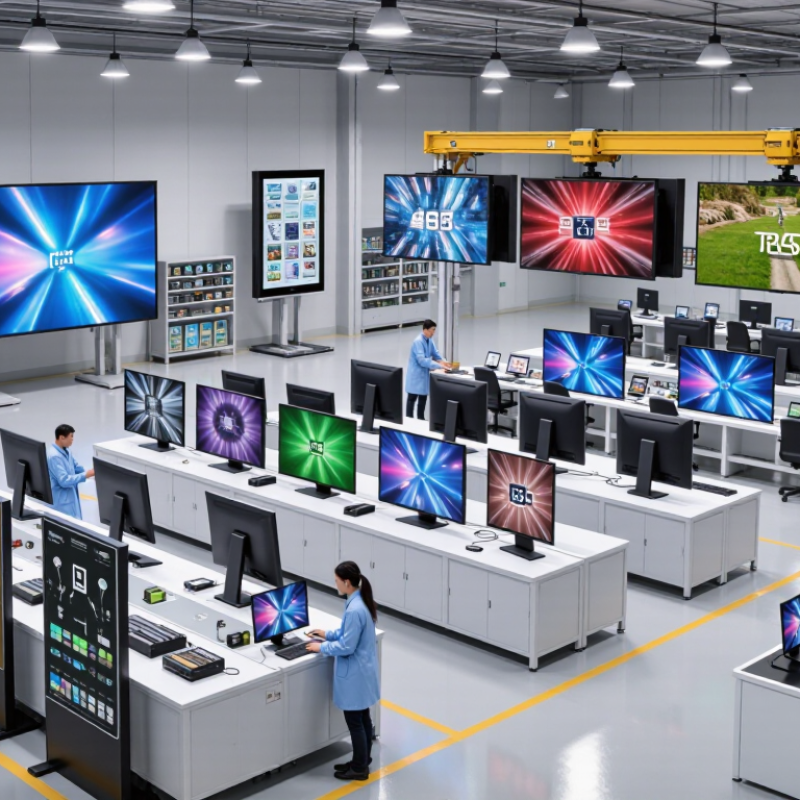
China’s Digital Signage Manufacturing Industry at a Glance
Who Are the Top Digital Signage Manufacturers in China?
China’s Digital Signage Manufacturing Industry at a Glance
China’s digital signage industry draws on a broad electronics supply chain, with many manufacturers concentrated in southern manufacturing regions. Companies produce LCD displays, LED panels, touchscreens, media players, and metal enclosures. Some focus on hardware; others also provide design, assembly, and installation support. The industry is diverse, but quality and service can vary.
Production often combines sourced components with in-house assembly and testing. A typical order may involve checking screen brightness, running displays for extended periods, and inspecting ports and casing. Export-focused suppliers may offer custom sizes or operating configurations. However, a polished factory tour does not guarantee consistent performance after installation. That part deserves careful checking.
Tips: Ask for recent test reports, sample units, and clear warranty terms. Confirm brightness, viewing distance, and daily operating hours before comparing quotes. Details matter. A low price may exclude mounting hardware or remote monitoring. Request those items in writing, and allow time to verify them.
Criteria for Identifying Leading Manufacturers in China
Leading Chinese digital signage manufacturers should be judged by verifiable performance, not catalogue size. MarketsandMarkets’ Digital Signage Market report projects global growth from USD 27.8 billion in 2024 to USD 40.9 billion by 2030. This forecast signals rising demand, but it does not rank Chinese suppliers. Buyers still need to check each manufacturer’s engineering depth, production controls, and after-sales capacity.
Ask for test records covering brightness, heat management, and continuous operation. A screen running in a bright shop window faces different demands from one in a quiet meeting room. Review sample units, component traceability, quality inspection procedures, and realistic lead times. Request references for installations with similar screen sizes and operating hours. A factory tour or live production audit can reveal whether documented processes match the workshop floor. No single certificate proves reliability. Check that certificates apply to the actual product and model.
Tips: Run a pilot before placing a large order. Test image uniformity, network stability, and remote updates over several days. Record defects and response times. Small gaps in support can become costly later. Manufacturers should answer technical questions clearly, though one awkward reply is not a full evaluation. Judge the evidence as a whole.
Profiles of Major Chinese Digital Signage Manufacturers
Major Chinese digital signage manufacturers often fall into three groups: display panel assemblers, LED screen specialists, and full-service system integrators. Their capabilities differ. Some focus on slim indoor LCD displays for retail shelves, while others build large outdoor screens with weather-resistant cabinets. Integrators may also supply media players, mounting hardware, and remote content software. The label “manufacturer” can cover very different levels of in-house production.
A useful profile looks beyond product photos. Check whether a supplier can provide panel specifications, brightness readings, thermal test records, and a clear warranty process. For a shop window, ask how the display performs under direct afternoon sunlight. For a control room, inspect bezel width and confirm that replacement panels remain available. Small details matter. A neat sample unit does not prove consistent production across a large order.
Factory visits or live video audits can reveal assembly areas, aging-test racks, and packaging methods. Ask how defects are recorded and who handles firmware updates after delivery. Some manufacturers offer flexible customization, but changes can stretch lead times or complicate spare-parts planning. That trade-off is easy to underestimate. Compare several suppliers using the same checklist, then request a pilot unit before committing to a wider deployment. One awkward point: published specifications may not show how a screen behaves after months of continuous use.
Key Products and Technologies in Digital Signage
China’s digital signage manufacturers produce a broad mix of commercial displays, including indoor LCD screens, outdoor LED panels, video walls, and interactive kiosks. Each serves a different setting. A narrow retail aisle may need a portrait display, while a sunlit transit entrance calls for stronger brightness and weather-resistant housing. Screen size alone tells little.
Key technologies shape everyday performance. High-brightness panels improve visibility near windows, and fine-pitch LED modules create smoother images at close viewing distances. Touch systems support wayfinding and self-service, while built-in media players reduce the need for extra hardware. Content management software lets operators schedule different messages across multiple screens. Reliable network connections matter, too. A perfect screen with a dropped signal is still a problem.
Look beyond the product sheet. Ask about color calibration, heat management, spare modules, and how quickly a failed component can be replaced. Small details matter. A display that runs for long hours in a warm shop needs careful thermal design, not just a vivid demo. Request operating tests under realistic conditions, including bright light and continuous playback. Specifications help, but they do not answer everything. Touch accuracy can vary, and software may feel clumsy. That deserves a closer look.
How to Compare Manufacturers for Different Project Needs
Comparing digital signage manufacturers starts with the job the display must do. A bright shop window needs a different screen from a quiet meeting room. Check screen size, brightness, operating hours, touch requirements, and installation conditions against your project plan. Ask for technical sheets, not just a polished product list. Small details matter.
Production quality is harder to judge from a quotation. Request sample units, aging-test records, and clear information about component sourcing and quality checks. For a multi-site rollout, confirm whether the manufacturer can keep specifications consistent across batches. Ask how spare parts, software updates, and warranty claims are handled, including response times. A low unit price may not cover costly replacements or delays.
For custom enclosures, review drawings and mounting points before production begins. I still find this easy to overlook: a screen can meet every stated specification and remain awkward to service once installed. Check the supplier’s experience with projects of similar size, climate, and use. References help, but ask specific questions about delivery, defects, and support after installation.
The best comparison is not always the longest checklist; it is the evidence that matches your risks.